
West End:- 47 x Greylag Goose, 2 x Mute Swan, 13 x Egyptian Goose, 2 x Mandarin Duck, 18 x Mallard, 2 x Stock Dove, 3 x Common Woodpigeon, 1 x Common Moorhen, 5 x Eurasian Coot, 1 x Common Sandpiper, 33 x Black-headed Gull, 12 x Common Tern, 7 x Great Crested Grebe, 11 x Great Cormorant, 7 x Grey Heron, 1 x Common Buzzard, 2 x Common Kingfisher, 2 x Common Magpie, 1 x Eurasian Jackdaw, 2 x Barn Swallow, 1 x Eurasian Nuthatch, 1 x Grey Wagtail
Month: August 2026
-
6th August 2026 seen by Nigel Driver (via WhatsApp)
WeirWood again at dawn. A lovely still day at the west end where the water was like a mill pond. The activity on the nesting platforms inc’ some smaller chicks still as well as some near fledging. An encouraging sign. On Pintail bank 2 Lapwings and 2 Mute Swans. Whilst the 12 Great-crested Grebes inc’ a half grown youngster. 5 Mandarins and 2 Teal were also seen. At Whillett’s a Sedge Warbler was in the undergrowth just over the hedge, also a Reed Warbler and 2 Reed Buntings. At the dam fewer gulls than recent days, about 50 Black-headed and 5 juv’ and 6 ad’ Herring Gulls. 6 Great-crested Grebes, 5 Common Sands scattered about and a Greenshank along the north shore. On the dam slope 11 Pied Wagtails, 2 Stock Doves, juv’ Green Woodpecker, Collared Dove and ad’ Common Gull. In the c/pk Goldcrest and a Raven over calling. Below the dam Whitethroat, 2 Jays and 4 Chiffchaffs. A very pleasant couple of hours spent.
-
4th August 2026 seen by Nigel Driver (via WhatsApp)
WeirWood late morning to early afternoon dam end 2 Common Gulls 1st year and ad’, on the dam with ca110 Black-headed and 33 Herring Gulls. 2 Common Terns juv’s and a Black Tern juv’ on the north shore then flying about plus 4 Common Sands around. A Green Sandpiper was also noted flying down the reservoir on the slope Green Woodpecker juv’ and a Mistle Thrush. Below the dam a nice Lesser Whitethroat.
-
4th August 2026 seen by James (via WhatsApp)
0730 westend
1 common sand, 2 lapwing, 2 swan, 8 mandarin some with young, 4 teal, 3 coot, 3 moorhen, 6 mallard some with young, 6 GCG, 8 c terns, only 1 BH gull away from the raft this morning, chicks still on the raft but no one minding them. -
4th August 2026 seen by Linsey Gooding
West End:- 43 x Greylag Goose, 23 x Canada Goose, 2 x Mute Swan, 2 x Egyptian Goose, 5 x Mandarin Duck, 11 x Mallard, 2 x Stock Dove, 6 x Common Woodpigeon, 3 x Common Moorhen, 4 x Eurasian Coot, 2 x Northern Lapwing, 1 x Common Sandpiper, 5 x Black-headed Gull, 1 x Lesser Black-backed Gull, 9 x Common Tern, 10 x Great Crested Grebe, 12 x Great Cormorant, 7 x Grey Heron, 1 x Eurasian Sparrowhawk, 1 x Common Magpie, 1 x Carrion Crow, 2 x Eurasian Blue Tit, 3 x Barn Swallow, 3 x Common Chiffchaff, 1 x Eurasian Nuthatch, 1 x Eurasian Wren, 1 x Eurasian Blackbird, 1 x European Robin
-
Work Party – July 2026
This was a busy month. Our main work on the 7th July was to take the ESCC tractor up to the canoeists access point on North Bank. The entrance of compartment C14 has a small grassy area that we cut, plus we cut a path at the boundary hedge area which had become overgrown with bramble so we could maintain access to the hedge.
We then continued and cleared the access path right through to C12 and the meadows. This path cutting was not straight forward as several large trees were down along the route blocking the path, these all had to be cleared with a chain saw and hand tools to make the path sufficiently clear to get the tractor to the site.
Once at the C13 meadow with the Sand Martin bank box, all the bracken to the east end was cut, plus all the other bracken/ bramble areas were also strategically cut but leaving some areas uncut that had good flora. Also, no cutting was carried out along the water edge where we are encouraging marsh plants, only hand removing some unwanted Willow saplings.
A further meadow to the West in C12 not visible from the car park was also cut. This meadow had been neglected and been taken over by bracken. It is an area that we are now trying to improve by cutting to control the bracken and improve the habitat for flora and wildlife generally.
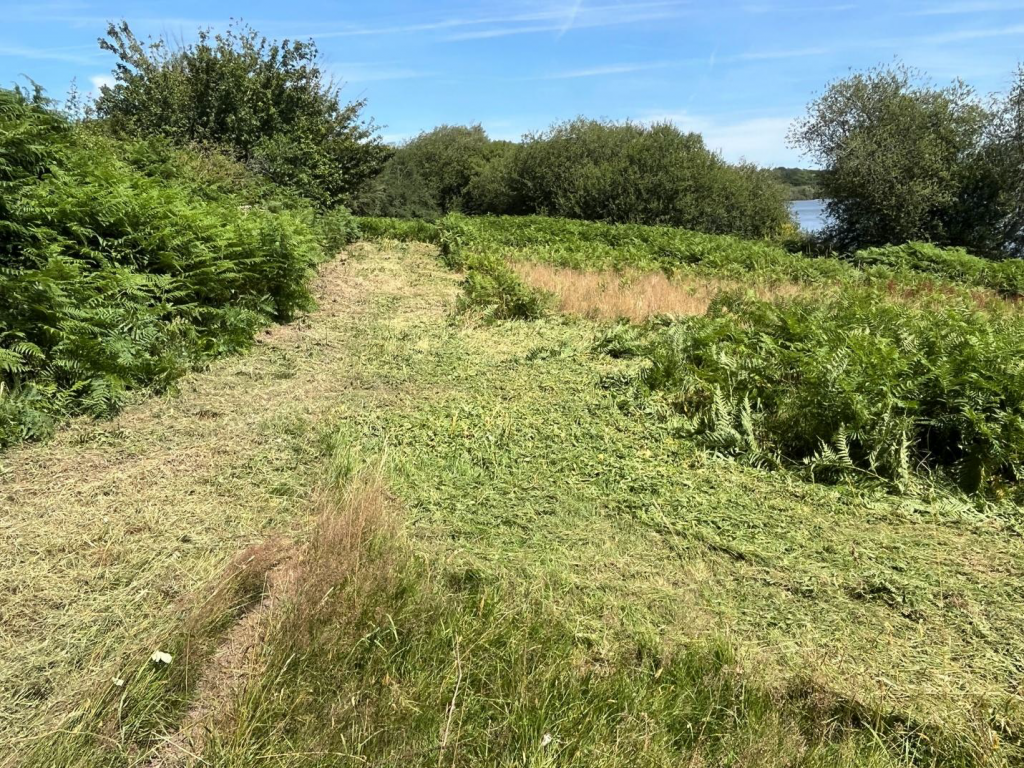
Pic – Bracken area at C13 meadow at east end after the first few cuts were taken to get a perimeter path.
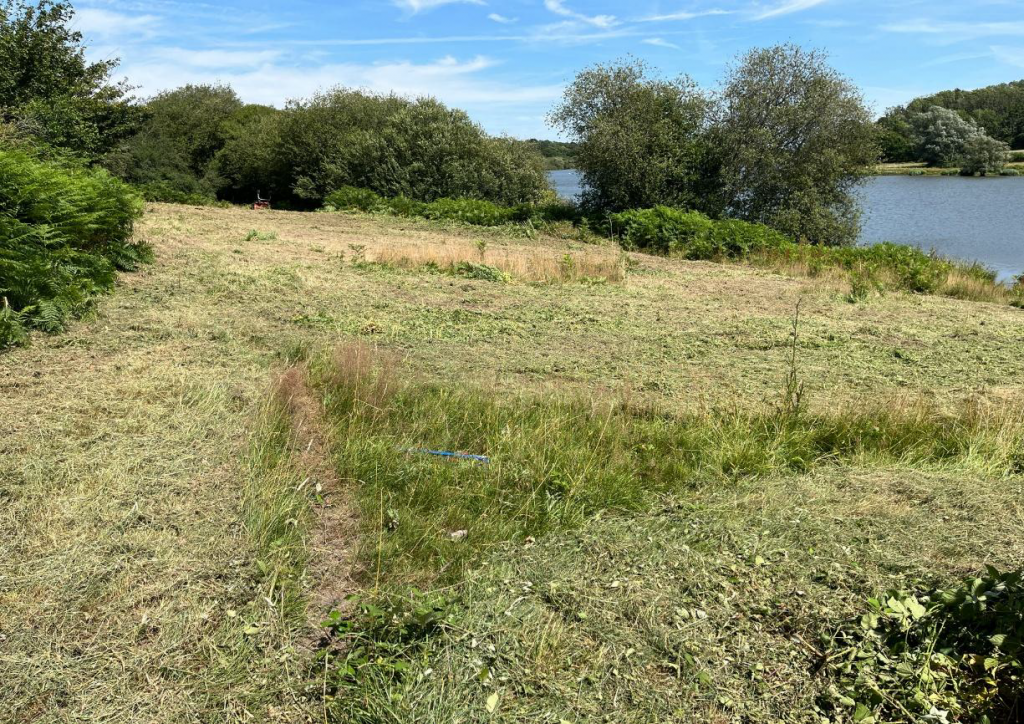
Pic after most of the machine cuttable bracken areas were cut at Eastern end of C13 meadow.
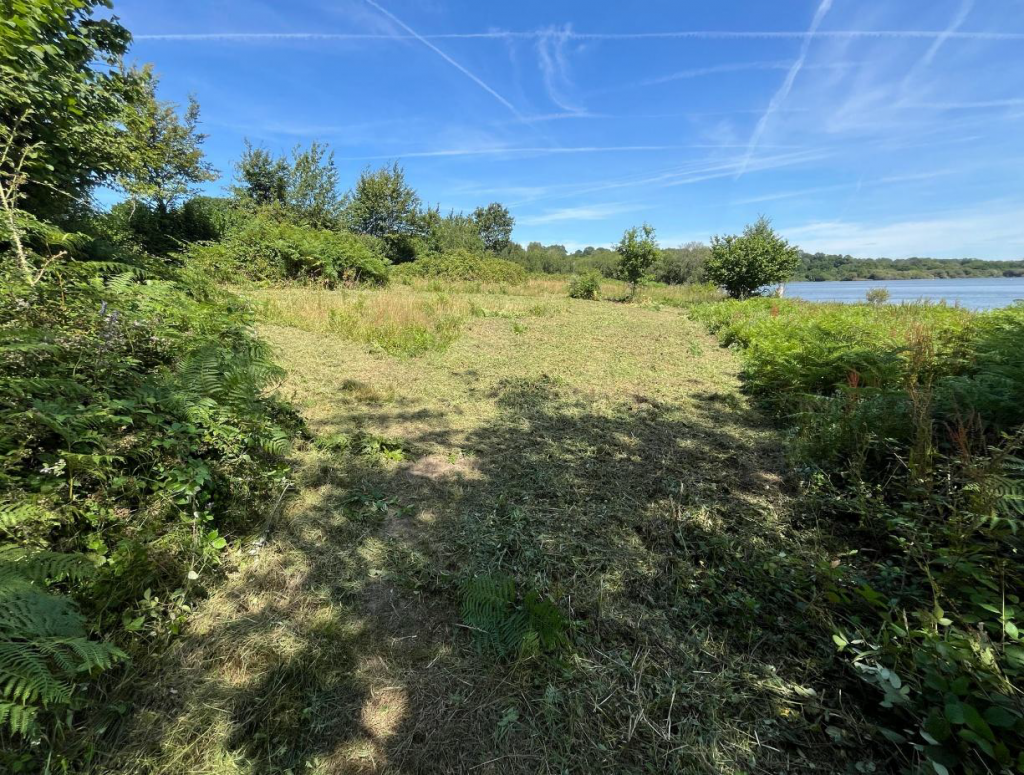
Pic above is the west side of C13 meadow looking East showing some of the cut and uncut areas.
Plus we retained some stands of bramble and the odd tree for nesting birds etc.
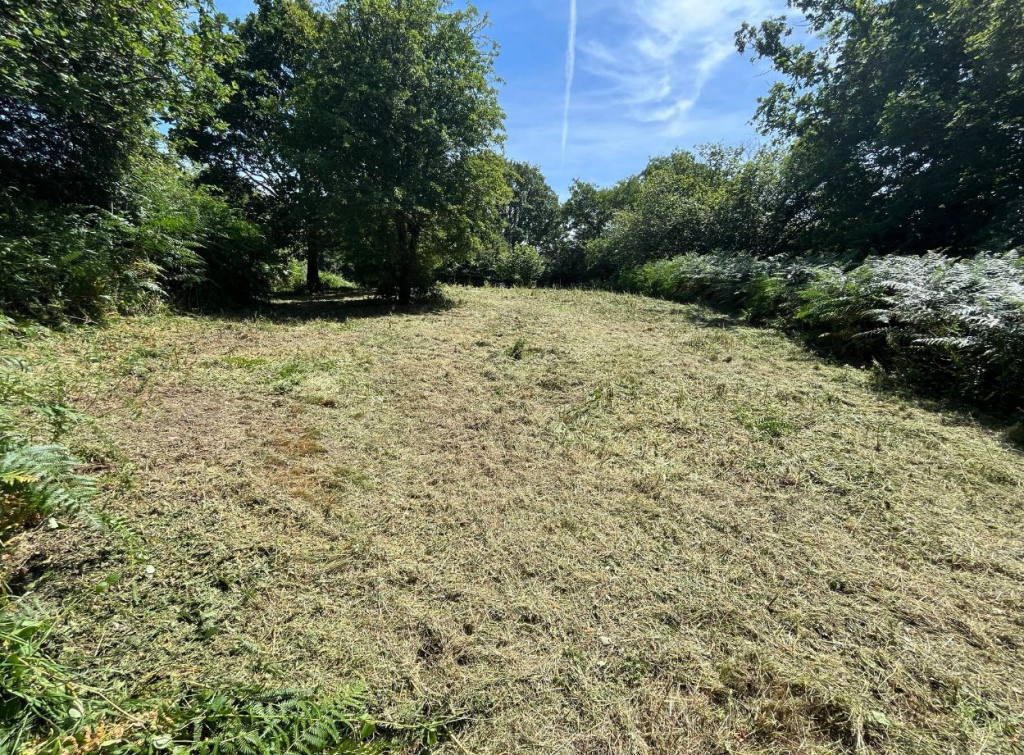
Pic is of the C12 compartment meadow looking east, after the tractor had cut all the areas it could safely access.
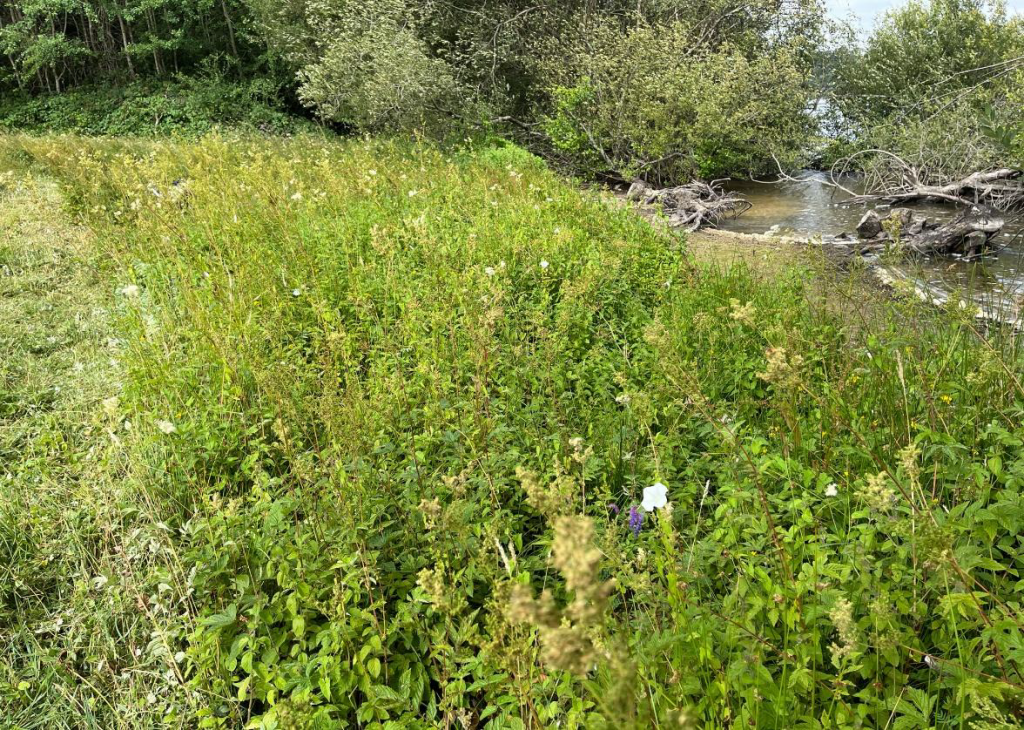
On the 14th July we carried on with more grass cutting of meadows, this time on the dam end side of South Bank beyond Admirals Wood in compartment C30 where we have two meadows.
Pic to left is of the west side meadow showing flora we retained at reservoir edge
This meadow still has some bramble problems to control, but the flora is improving to the point that this year we have only cut selected areas of the meadow to allow the flowers to seed and spread.
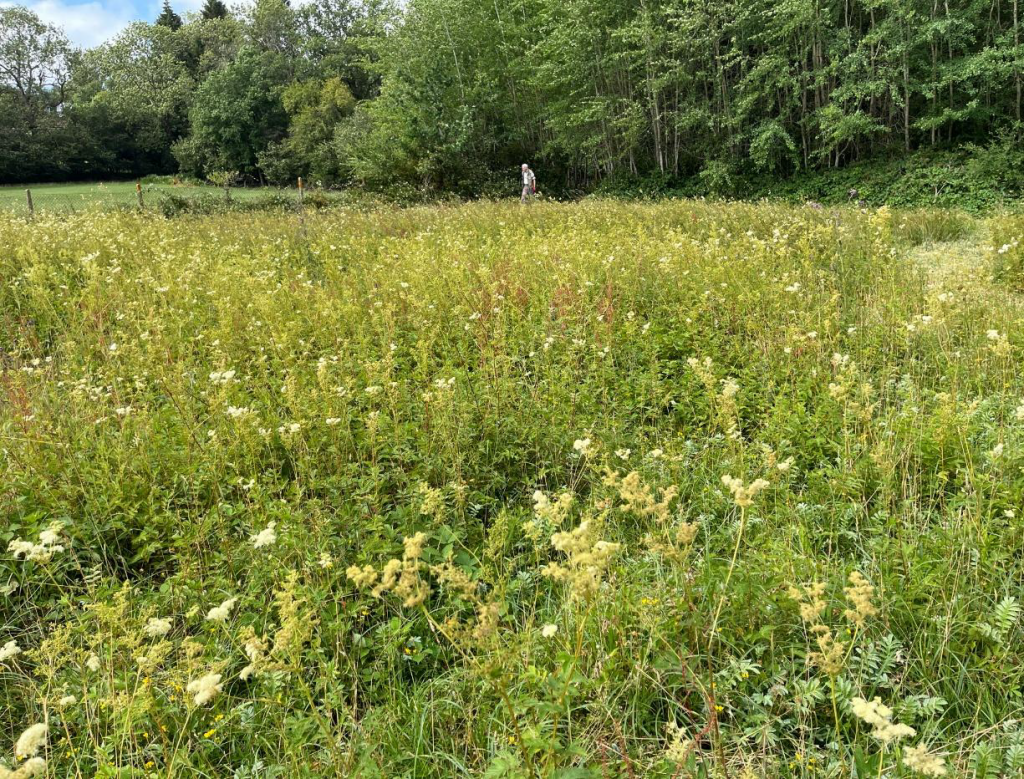
Pic on left showing a large stand of Meadowsweet plus a sprinkling of some other meadow flowers which we left untouched.
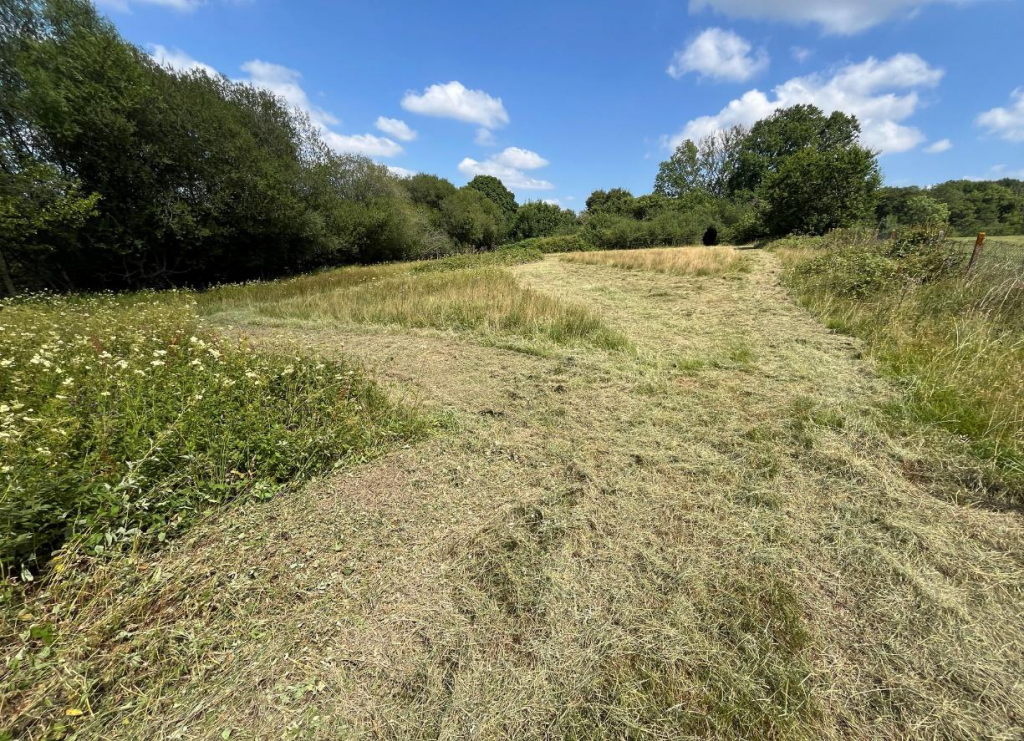
Pic on left is looking away from the Meadowsweet stand towards the other meadow which is beyond the trees in the background.
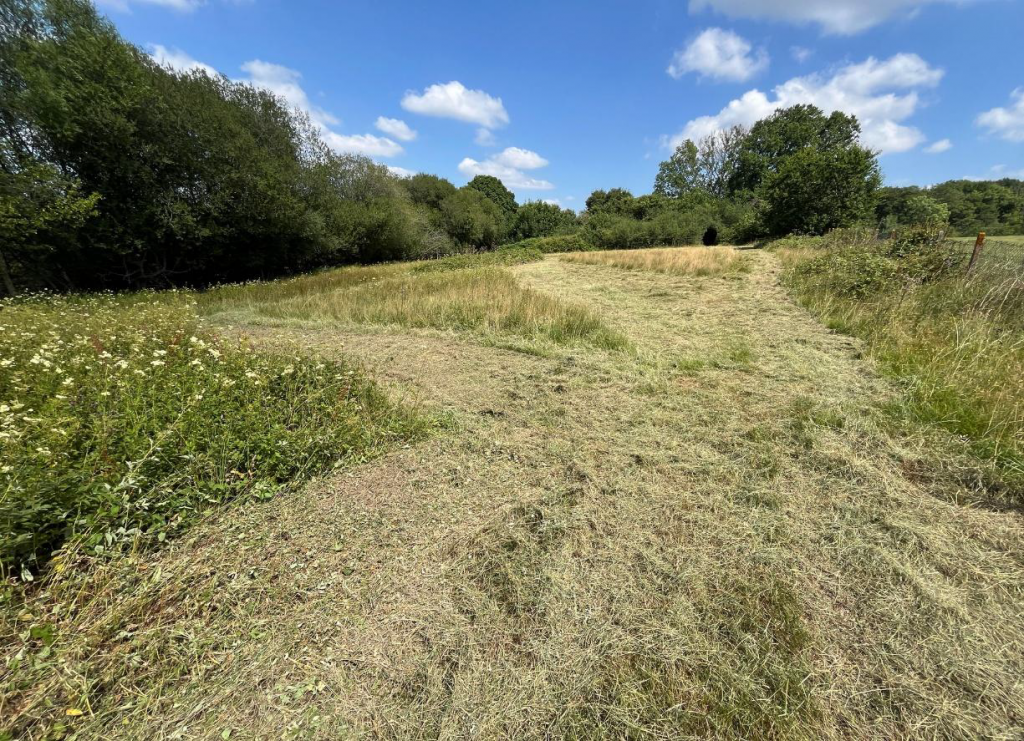
This east side meadow has a bracken problem and is totally bracken dominated.
Pic to left shows a major part of the bracken meadow after it was machine cut.
There is some flora nearer the water edge.
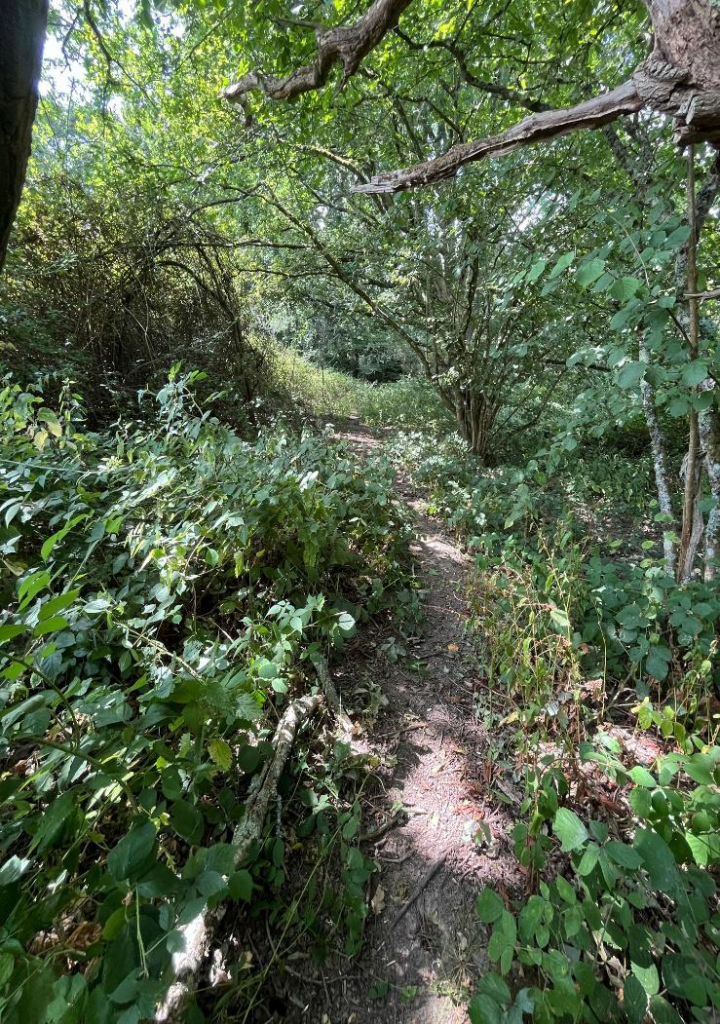
On the 14th July we also carried out path cutting on the path beyond the C30 meadows where we cleared overhanging tree branches and cut through bracken and bramble areas by hand to maintain a footpath to allow maintenance access and surveys, reaching the start of compartment C28 as being a suitable stopping point.
Nb. We completed clearing the path later in the month (See 28th July work).
On the 21st July we found that strong winds through the week had blown down several trees around the West End Nature Reserve & Whillet’s meadows including some work around the reedbed.
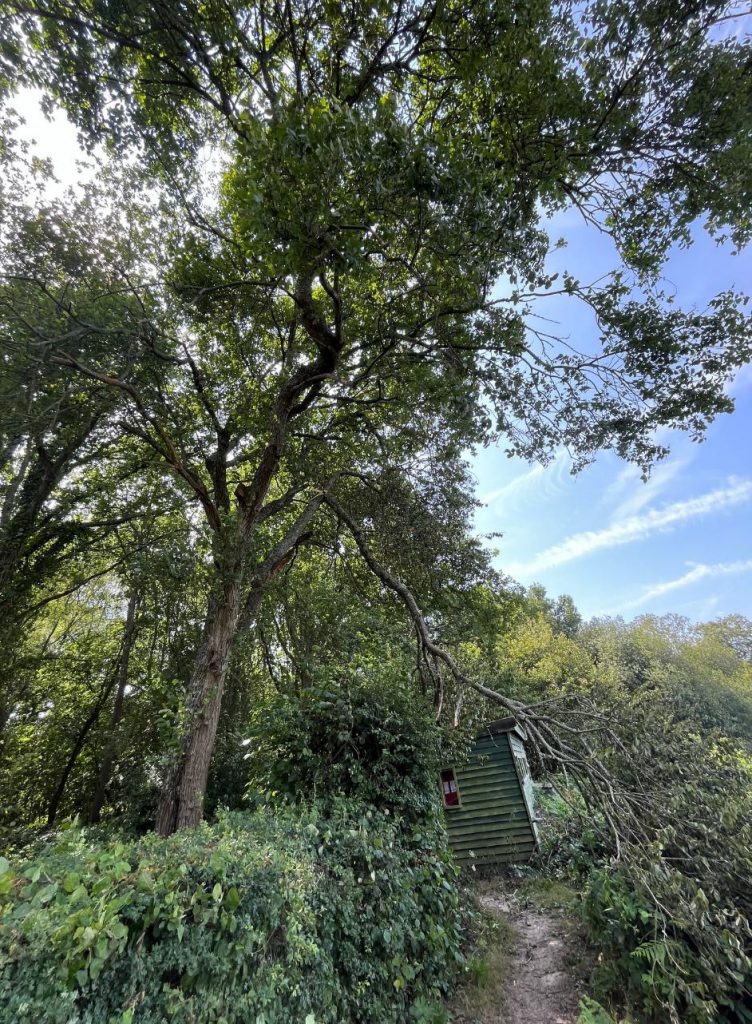
In particular this tree near the hide had caused us concern as it had a partly fallen branch and had weakened/damaged branches in the upper canopy. These were now considered to be a potential danger to both the hide and the public.
We tidied up some of the fallen branches so the access gate could be opened but we left alone any structural elements of the tree to keep it as safe as possible.
.
We were advised it would need tree surgeons to carry out the work with specialist equipment to remove the damaged and weakened areas safely. This was beyond our remit.
We therefore advised Southern Water of this notable public safety hazard problem and to their credit on the 29th July their specialist tree contractors visited the site with specialist machinery and carried out total removal of the tree which they confirmed was dangerous.
Other work covered on the 21st July
We noted a damaged and dead hawthorn tree next to the footpath leading to the hide which was becoming a hazard and this was cleared whilst we were working in the area.
Over at Whillet’s in the 3rd meadow we cleared the access path through to the old Otter holt, and then cleared some Himalayan Balsam that we found was growing near the river bank in this area.
Over at the glade area a tree was down. (See below)
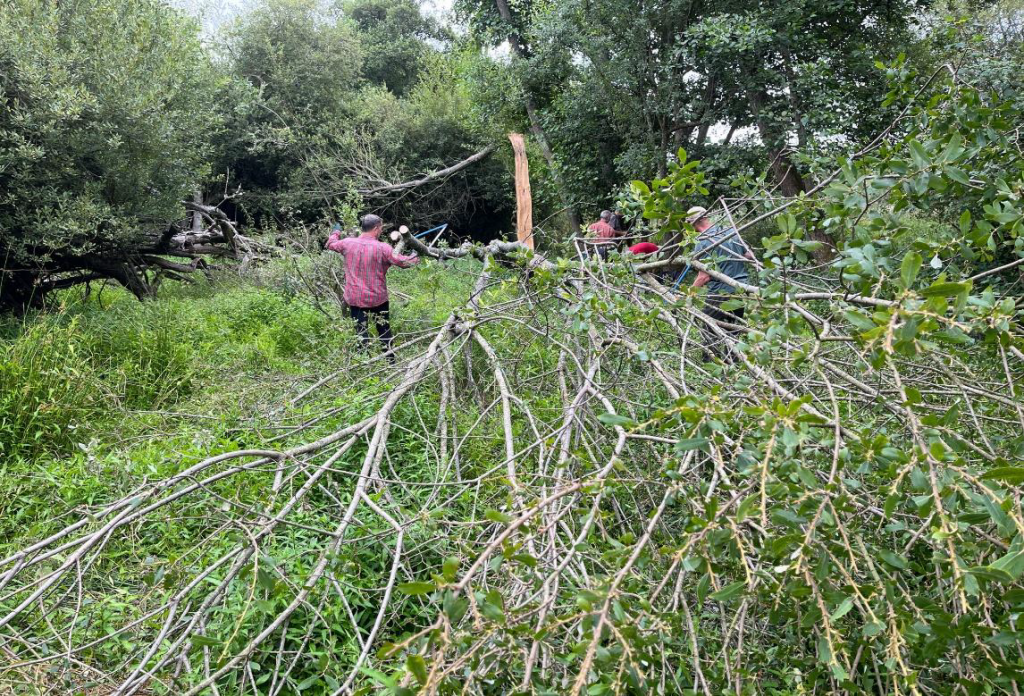
Volunteers carrying out work clearing some of the broken/split tree at the back of the glade in the 3rd meadow of Whillet’s C11
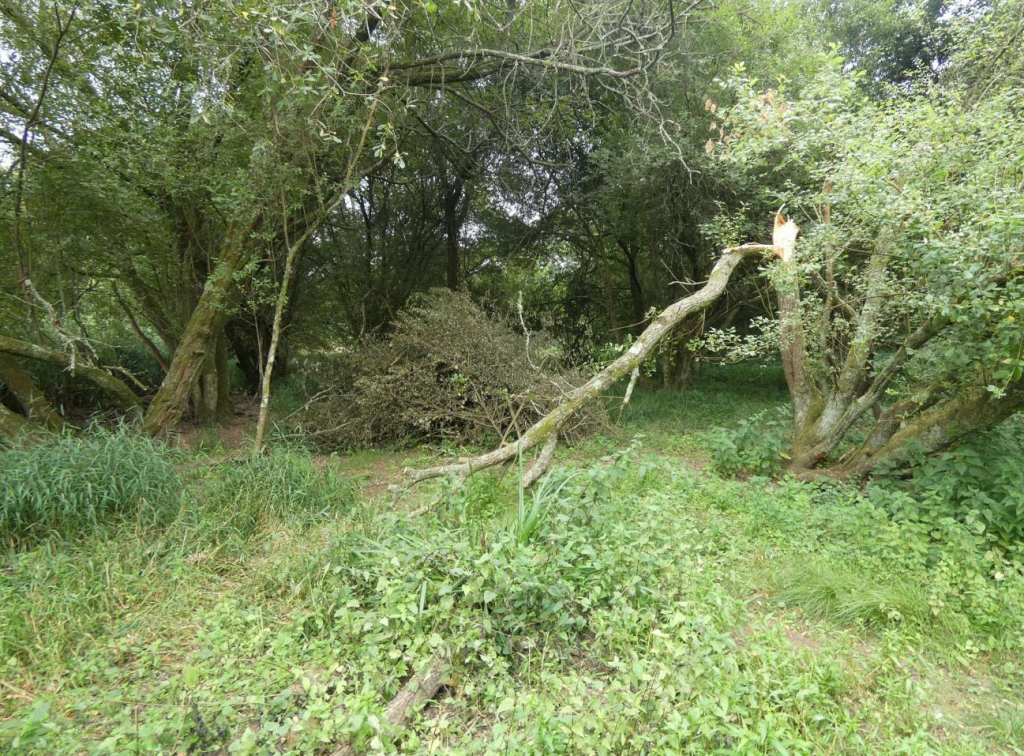
A fallen tree alongside the footpath to the reedbed viewing platform was cut and stacked by volunteers, the final clearance work now just awaiting completion by our Rangers with their chain saws.
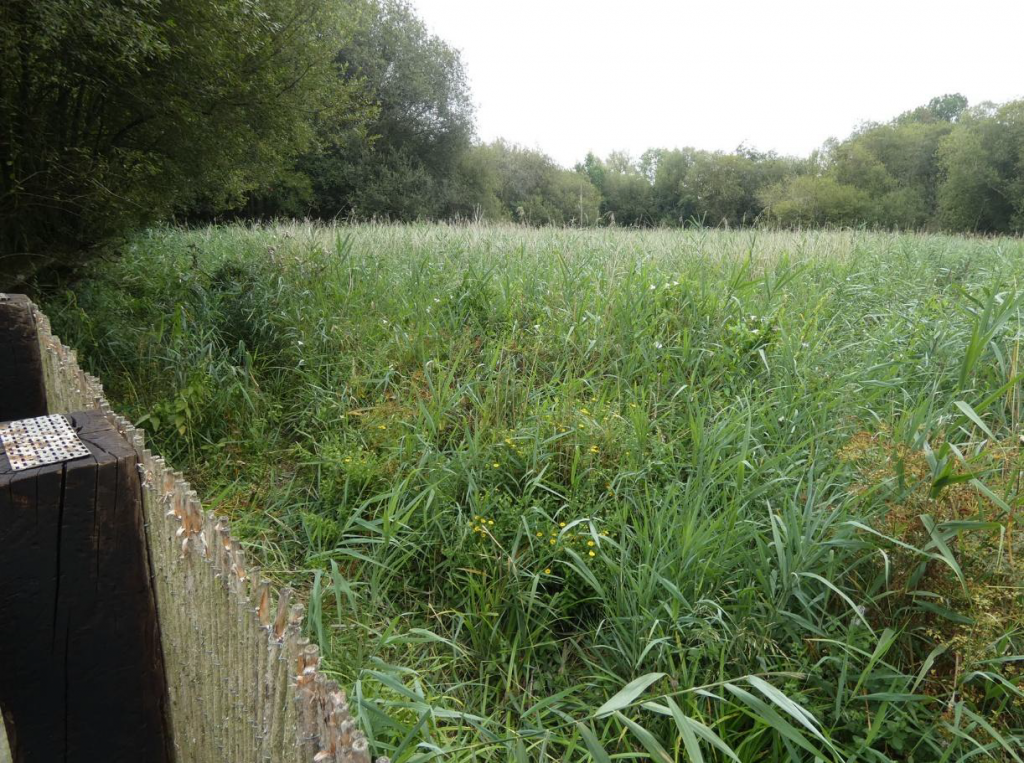
Pic on left is view from reedbed viewing platform after raising canopy on Willow at left hand side. We also removed Willow saplings at left side where we have a stand of Hemp Agrimony growing which is very attractive to butterflies and quite rare within the reserve.
We also cut an access path through the reeds so we could reach the path that leads to an open area where we can access the reedbed Island which we maintain when water levels allow.
Work on the 28th July – We were back again mowing meadows, this time on the South Bank but nearer the dam end to cut the meadows that are behind the Reedbed within compartment C27 where there are several meadow glade areas among some oak trees. This time we were accessing from along the path past the sailing club building.
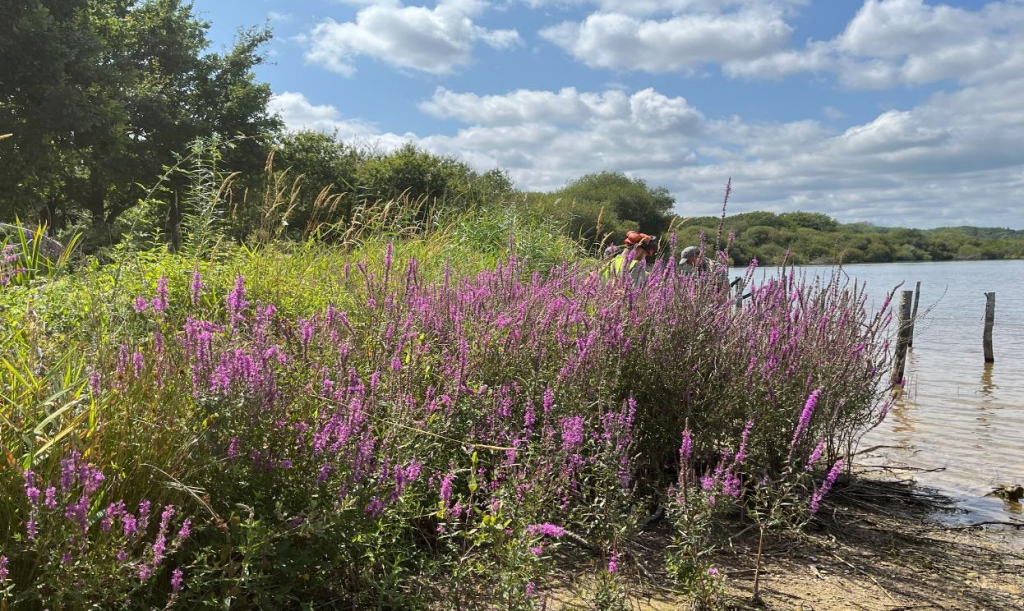
Pic showing line of the reeds with Purple Loosestrife in flower.
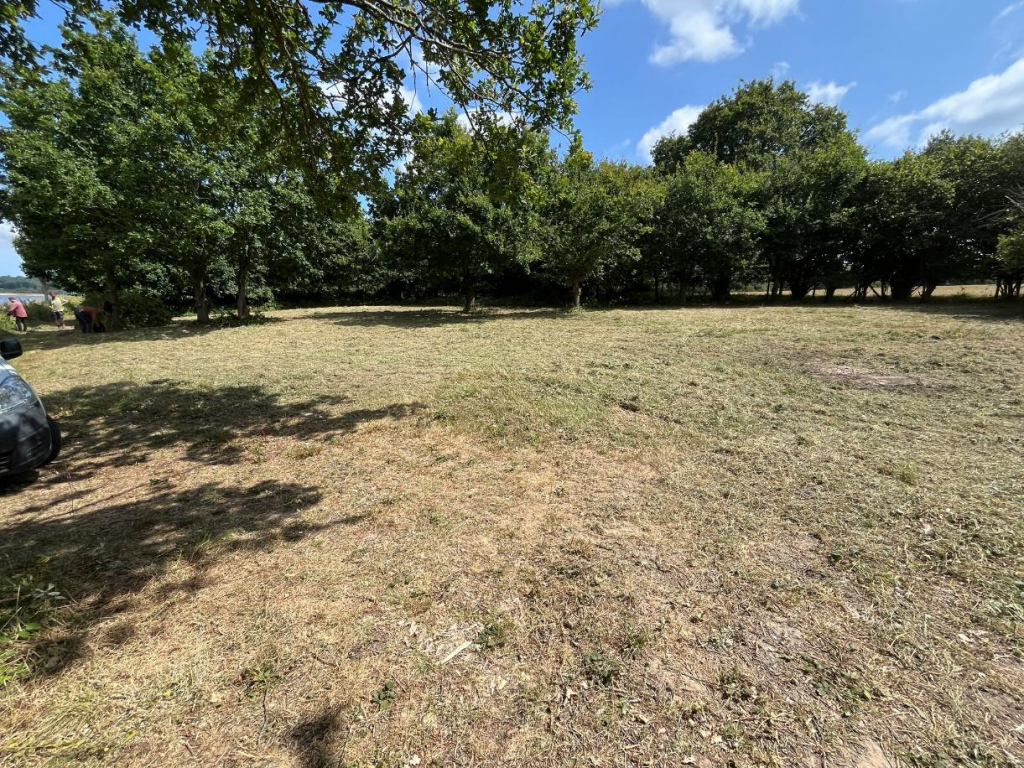
Pic shows part of the central meadow after cutting.
The east meadow which was also cut is smaller and beyond the back line of oak trees.
Reservoir and reed-bed are to the left of the picture.
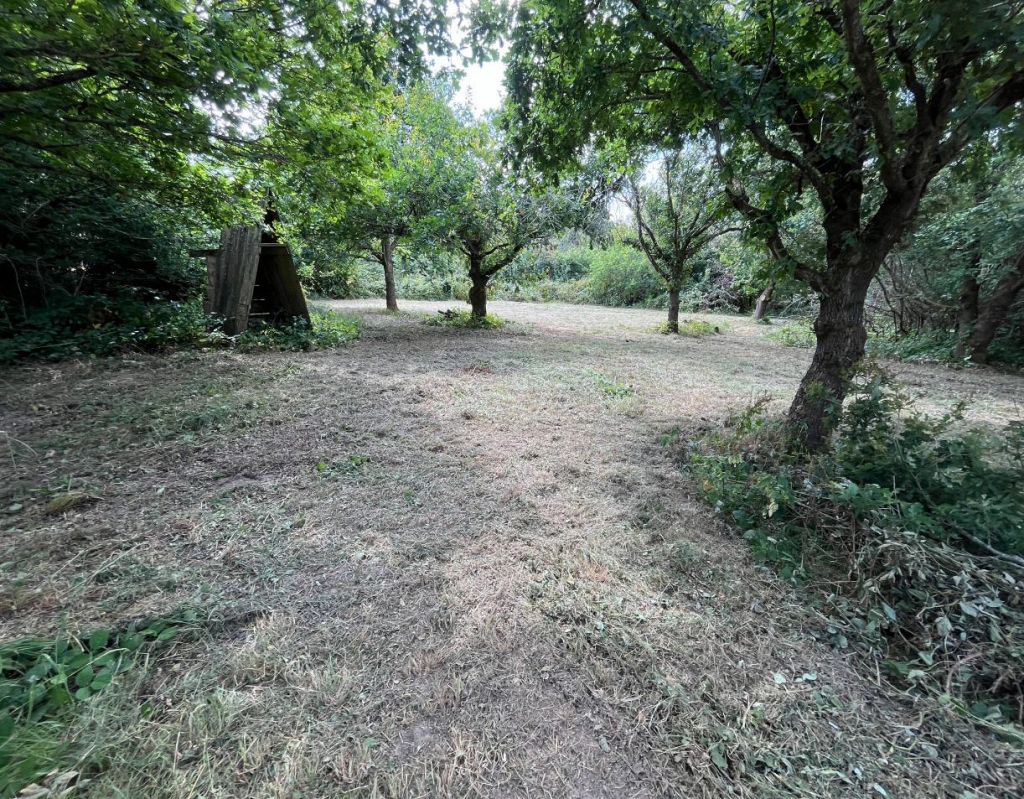
Pic shows part of the west meadow after cutting..
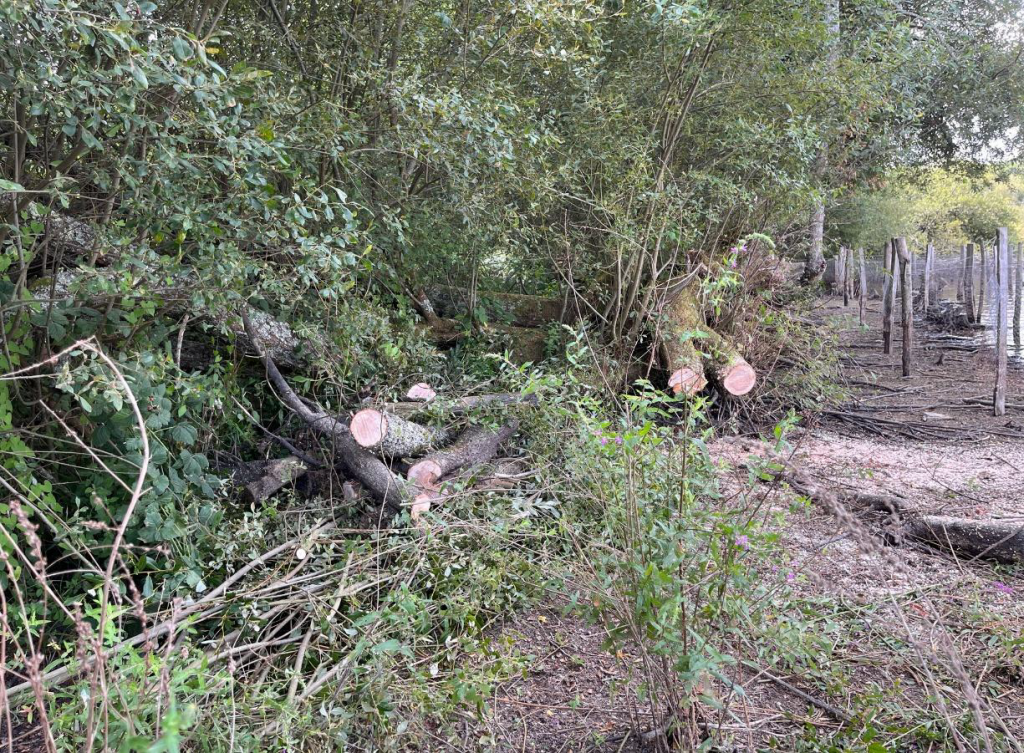
The cages at water edge were originally put in to house the reeds, but that planting failed. Now that reeds are spreading from further along the reedbed we decided to clear the overhanging willow in this area to give more light for marsh plant growth and eventual reed planting.
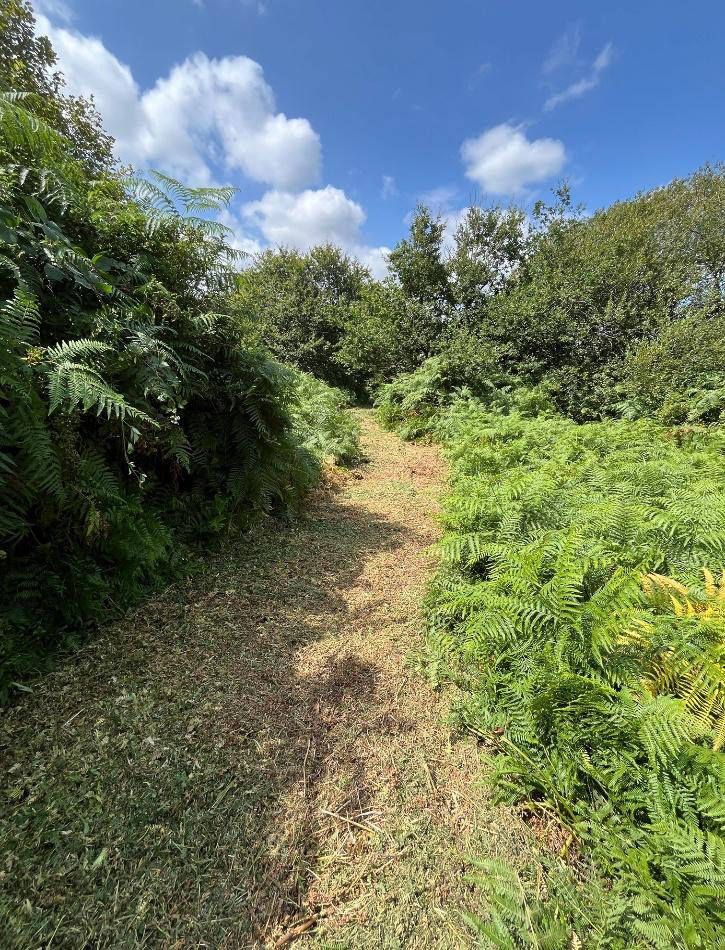
Finally we carried out path clearing from the reedbed area in compartment C27. We hand cut a trail for the tractor to follow, and were able to machine cut a wide path as far as compartment C28 where the terrain was unsuitable for the tractor to go any further.
We then hand cleared the path through C28 up to the start of C29 which is where we managed to reach on the 14th July coming the other way.
This meant the whole of the South Bank was now fully navigable on foot for access and surveys.
If we did not carry this out periodically the scrub would become impenetrable and the access lost..
Some parts of the reservoir’s North Bank are now only reachable by boat.
Pic – showing the path that we cut through one of the bracken areas. As we approached the end of compartment C27.
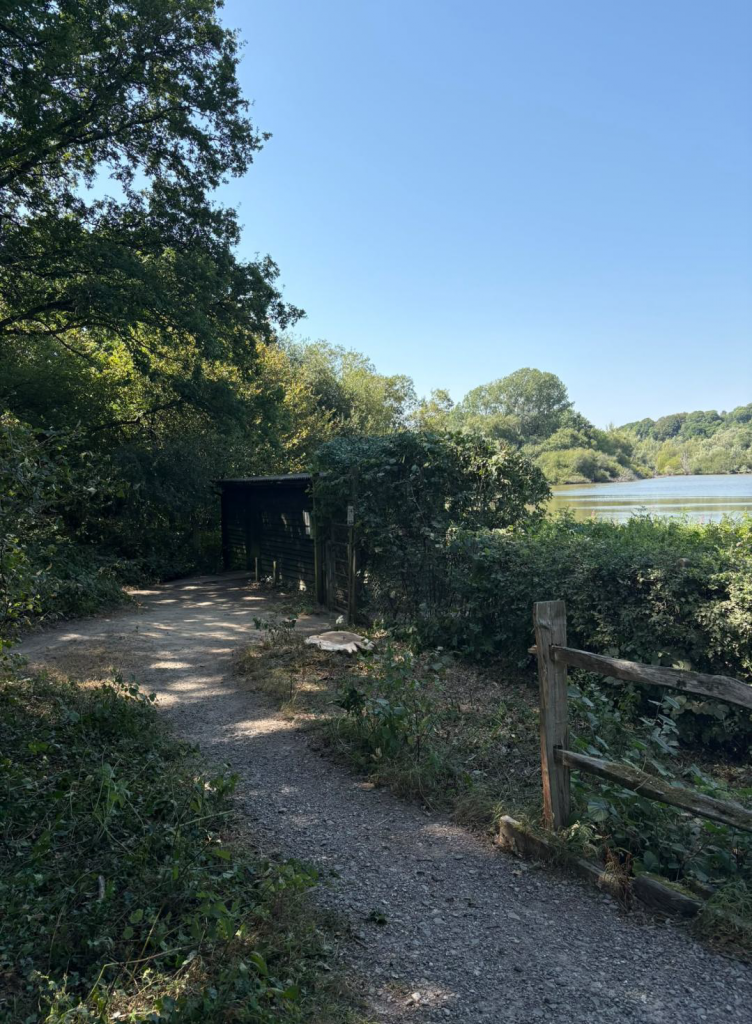
Final pic is of the contractors completed work of removing the dangerous tree on the 29th July.
The picture above showing just the stump that is left.
This work not only made the area safe, it should also improve the wildlife viewing particularly for fly over birds and passing raptors now we are not losing birds behind the tree that so many have complained about in the past.
-
3rd August 2026 seen by Alastair Gray (via WhatsApp)
Just one each of Common Sandpiper and Lapwing at W end.
-
2nd August 2026 seen by James (via WhatsApp)
West end with David and Keith 1700-1900
Little egret across from the hide and a common sand on the bank by the sand martin nest
The heronry end had a large flock of ~40 greylags and 4 egyptians, 4 mandarins, 4 coots and 2 moorhens
On the mud patch just below the heronry were 2 green sandpipers
2 mute swans were swiming the pintail end tonight, along with 6 great crested grebes
Low numbers of black head gulls this end – only counting around 10, 8 adult common terns on and around the rafts with at least 3 chicks visible tonight, a lesser black back was also out the back
Quite a few swallows and sand martins tonigt, with nunbers increasing as it got later
Keith had a kestrel before I arrived, and a buzzard was active low above the trees mobbed relentlessly by the terns
Lovely evening to catch up and chat too. -
2nd August 2026 seen by Edward Paxton (via WhatsApp)
Dam end at 9.55 a Honey Buzzard high over the north bank. Three Buzzards below it in the kettle.
West End, 2 fluff ball Common Tern chicks and 5 teenagers. Bob picked up two tiny GCG chicks tucked under the south bank with Mom. One Little Egret and a Kingfisher. One Cmn Sand on the left hand raft. -
2nd August 2026 seen by Alastair Gray (via WhatsApp)
Dm end from 07;15
Highlights my first Lesser Whitethroat of the autumn moving through the scrub NE corner of the dam.
Green Sandpiper on north shore feeding under willows in shallow water,6 Common Sandpipers scattered around.
217 Canada Geese,2 GBB gulls,1 LBB gull,90 BH gulls & 3 Herrings.
Juvenile Green Woodpecker and female Kestrel on dam slope.
1 Sand Martin,1 Swallow,4 Swifts and 6 House Martins noted,8 Pied Wags in Paddock.
Few Chiffchaffs and a Blackcap seen but bushes quiet.
Finally as I left a Kingfisher strangely flew through the car park.West end
5 more Common Terns have fledged all doing short flights,2 small Mandarins with mum.
Little Egret and 1 more Common SandpiperAlso ad Common Gull,2 Mute Swans,2 Coot and a noisy Juv Common Buzzard upsetting the Terns.
Yet another Sedge Warbler,Reed warbler,2 Whitethroats & 2 Chiffchaffs Nr meadow Pond.
Greenfinch,2 Bullfinch & Goldcrest in bushes,17 Goldfinch feeding on thistle heads.
Noticed butterflies moving NE-SW,10 Painted Lady’s & 3 Clouded Yellows.